
Predictive Thermal and Vibration Risk Monitoring in Rotary Equipment
A major power generation and water utility managing 240 high capacity centrifugal pumps, steam turbines, and industrial compressor units.
Run on Yantra · Industrial Operations Console
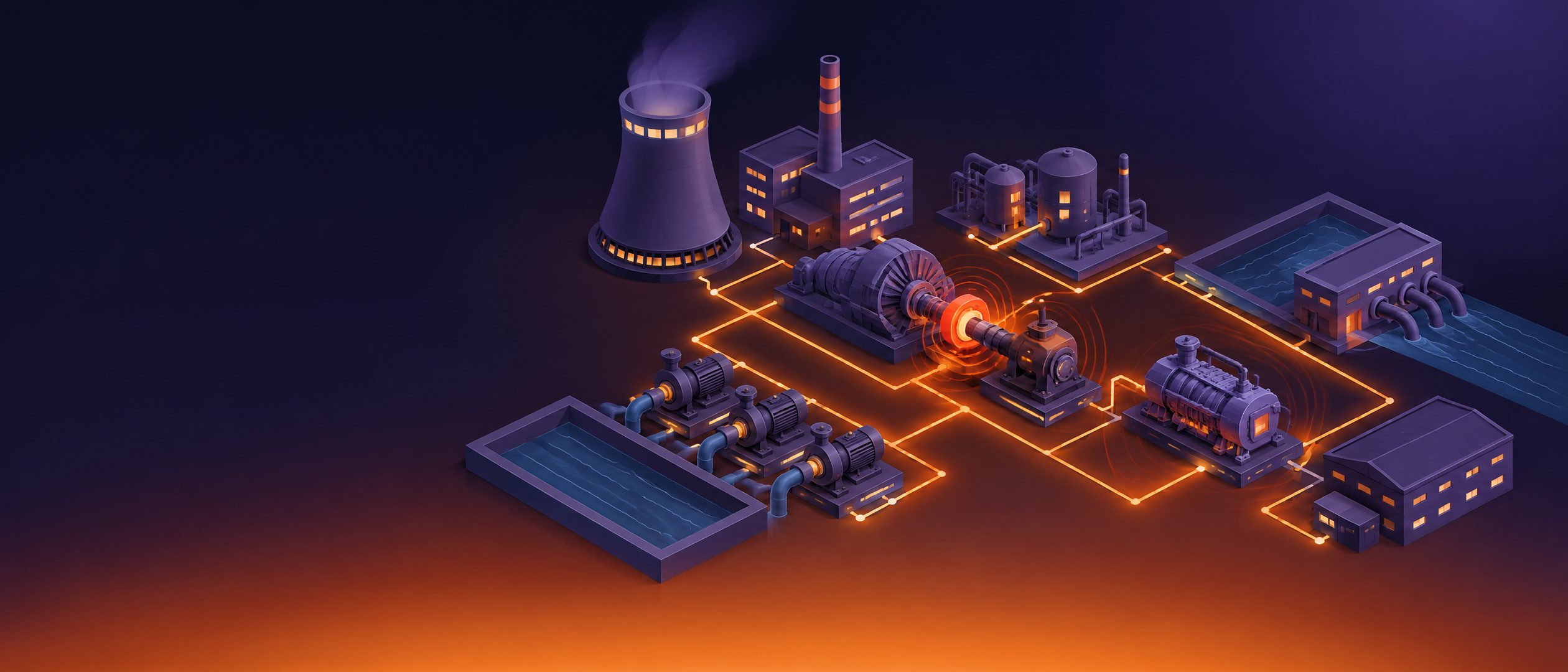
Turbine and pump maintenance was performed on rigid calendar intervals, resulting in unnecessary servicing of healthy assets and unexpected bearing failures.
High Frequency Telemetry Processing → FFT Spectral Analysis → Remaining Useful Life Curves → Speed and Load Derating Recommendations
Catastrophic rotary equipment mechanical failures reduced by 92%.
The challenge
Turbine and pump maintenance was performed on rigid calendar intervals, resulting in unnecessary servicing of healthy assets and unexpected bearing failures.
Vibration and bearing temperature anomalies developed rapidly between quarterly manual technician inspections, causing catastrophic shaft seizures.
Replacing a damaged high pressure pump shaft cost $180,000 in emergency machining and 5 days of lost utility pumping capacity.
How our team solved it, with Yantra
- 01
High Frequency Telemetry Processing
Yantra continuously samples tri axial vibration accelerometers and bearing thermal sensors at high frequency.
- 02
FFT Spectral Analysis
Real time FFT frequency decomposition identifies bearing inner race defect frequencies, misalignment, and impeller cavitation.
- 03
Remaining Useful Life Curves
Yantra projects asset health decay curves, calculating the operational hours remaining before critical failure.
- 04
Speed and Load Derating Recommendations
Yantra recommends operational speed adjustments to safely extend asset life until scheduled maintenance windows.
- 05
Reliability Lead Approval
The reliability lead reviews each derating recommendation and remaining life projection and approves the resulting maintenance plan.
- 06
CMMS Integration
Once approved, Yantra schedules technician work orders, tooling reservations, and replacement bearing parts in the maintenance management system.
The outcome
- Turbine and pump maintenance was performed on rigid calendar intervals, resulting in unnecessary servicing of healthy assets and unexpected bearing failures.
- Vibration and bearing temperature anomalies developed rapidly between quarterly manual technician inspections, causing catastrophic shaft seizures.
- Replacing a damaged high pressure pump shaft cost $180,000 in emergency machining and 5 days of lost utility pumping capacity.
- Catastrophic rotary equipment mechanical failures reduced by 92%.
- Equipment maintenance expenditure reduced by 34% by transitioning from calendar to condition based servicing.
- Extended average rotary asset operating lifespan by 3.5 years across the utility fleet.
Delivered for a client; the client name is withheld under NDA. References are available on request.
Capabilities used
Every accelerator is assembled from the same capability layer, so a workflow you adopt here shares its foundation with the rest of the portfolio.
Run on Yantra
Watch Yantra run, end to end, in a few minutes.
One role-aware console for equipment health, energy, alarms, and OT security.
See the Yantra acceleratorMore from Yantra

At a Glance Multi Plant Operational Telemetry and Anomaly Detection
A global specialty chemicals manufacturer operating 14 continuous processing plants with over 80,000 IoT sensors tracking temperature, flow rate, pressure, and chemical acidity.
Read the use case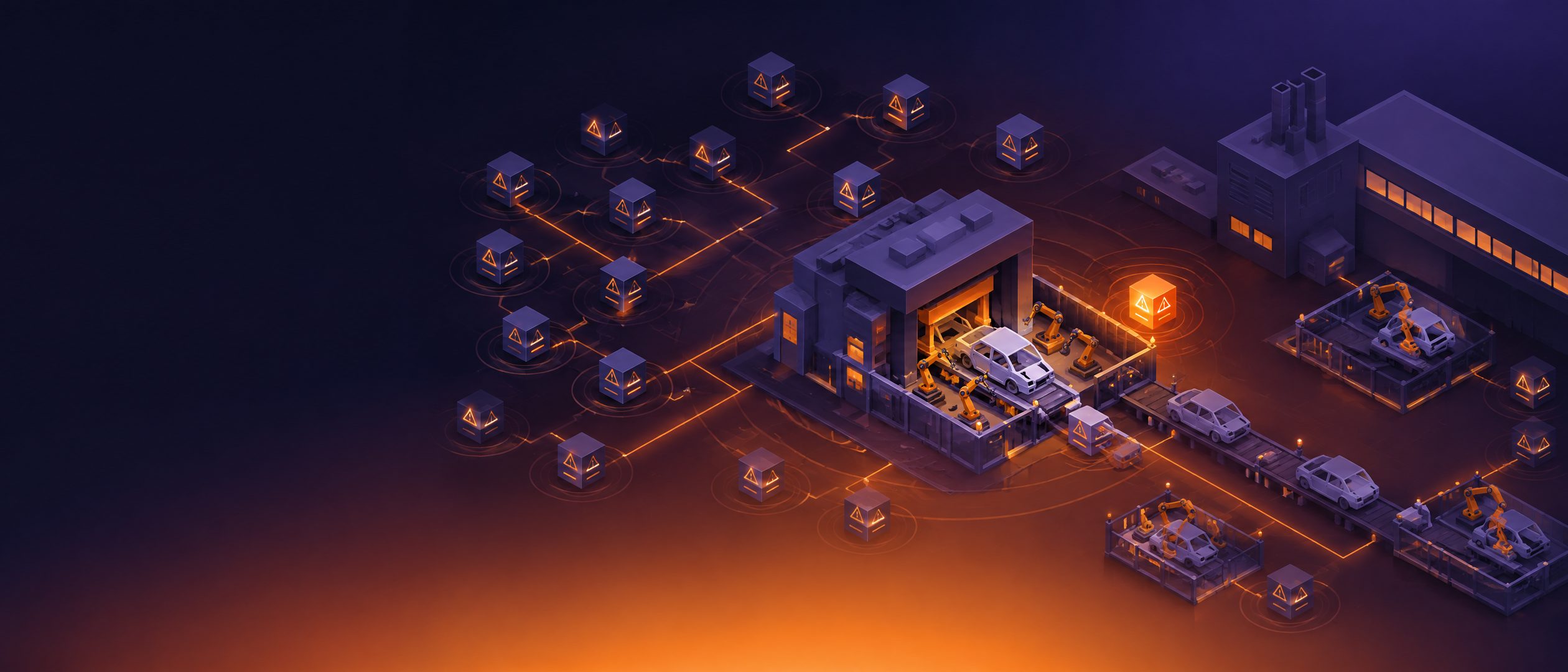
Intelligent Alert Triaging and False Positive Alarm Suppression
An automated automotive body stamping and robotic welding plant generating over 45,000 raw sensor alarms daily across 350 robotic welding cells.
Read the use case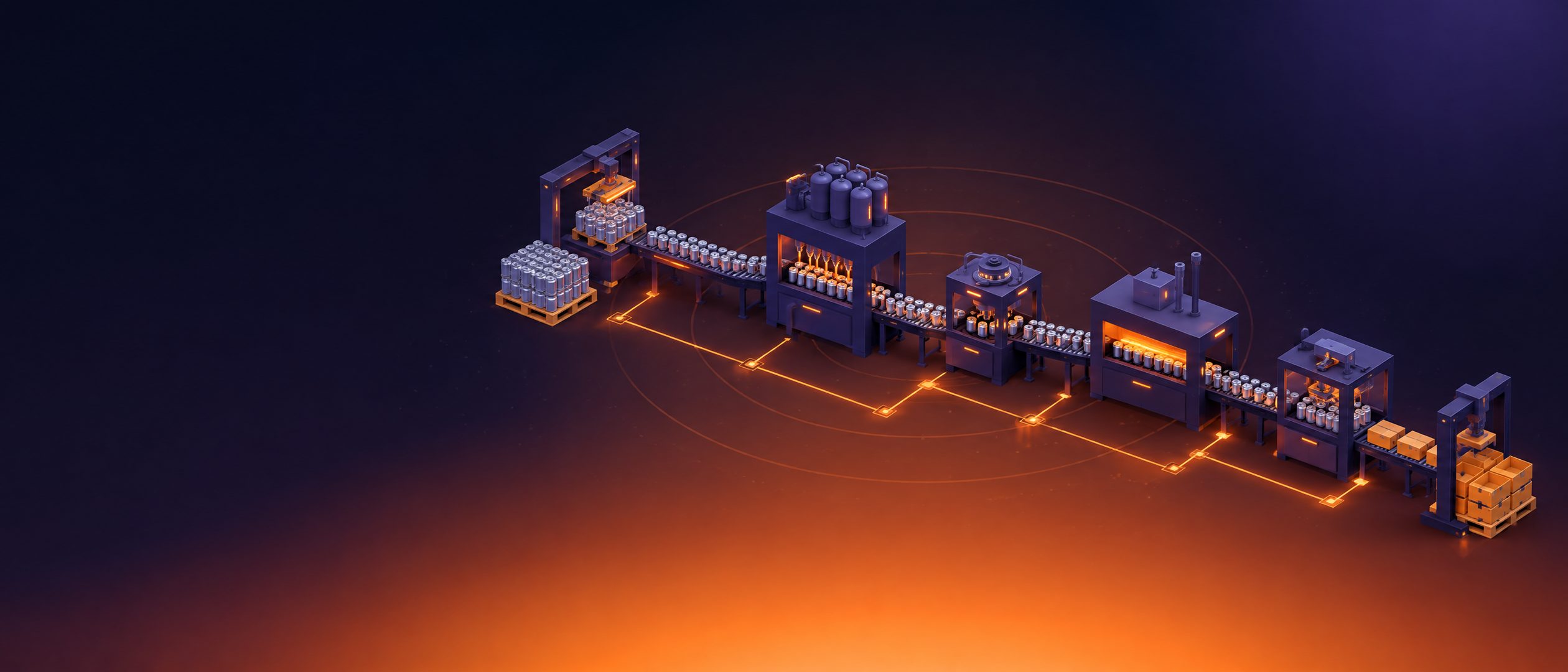
Cross Line Bottleneck Synchronization and Real Time Throughput Balancing
A high speed beverage bottling and packaging plant running 6 canning lines producing 1,500 cans per minute per line across depalletizing, filling, seaming, pasteurization, and case packing.
Read the use caseBring us the version of this that you actually have.
Every engagement is fixed in scope and milestone-gated. The scoping conversation starts with your systems, not with a template.