
Flame, Smoke and Chemical Leak Micro-Detection in Oil Refineries
A petro-chemical refinery operating hazardous process units, tank farms, and pipe racks monitored by 400 outdoor industrial CCTV cameras.
Run on Arjuna · Video Analytics
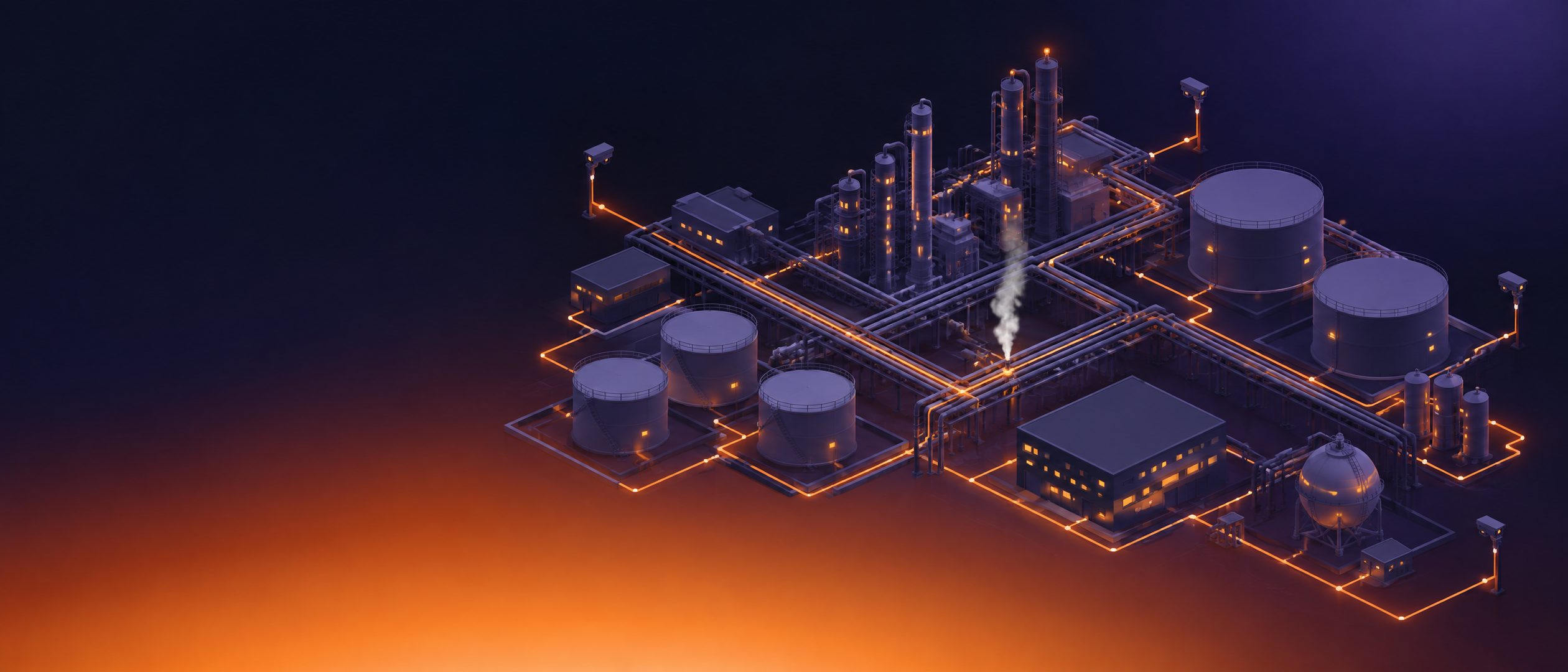
Traditional optical flame and point gas detectors were affected by outdoor wind currents, missing early micro- flames or vapor leaks until fires spread.
AI Video Flame and Smoke Spectral Analytics → Optical Gas and Vapor Plume Micro-Detection → Immediate Control Room Alarm Highlighting → Automated Deluge System Interlocking
Early flame and smoke detection response time cut from 3 minutes to 4 seconds.
The challenge
Traditional optical flame and point gas detectors were affected by outdoor wind currents, missing early micro- flames or vapor leaks until fires spread.
Early-stage chemical vapor leaks (e.g., steam, hydrocarbon vapors) are invisible to the naked eye but cause major safety disasters if un-detected.
Refinery safety rules required 24/7 continuous visual monitoring of high-pressure pump seals.
How our team solved it, with Arjuna
- 01
AI Video Flame and Smoke Spectral Analytics
Arjuna analyzes CCTV video pixels for characteristic high-frequency flame flickering and subtle smoke plume expansion patterns 10x faster than thermal point sensors.
- 02
Optical Gas and Vapor Plume Micro-Detection
Arjuna detects subtle atmospheric refractive index distortions caused by pressurized gas and steam leaks on existing camera views.
- 03
Immediate Control Room Alarm Highlighting
Live camera feeds pop up on central refinery SCADA monitors with red bounding boxes around micro-flames or vapor leaks.
- 04
Automated Deluge System Interlocking
Zone fire suppression deluge systems trigger when verified flame signatures breach critical size thresholds.
- 05
Supervisor Response and Sign-Off
The control room shift supervisor decides the isolation and maintenance response to each flagged leak, and the EHS manager signs off the incident logs Arjuna generates for regulatory authorities.
The outcome
- Traditional optical flame and point gas detectors were affected by outdoor wind currents, missing early micro- flames or vapor leaks until fires spread.
- Early-stage chemical vapor leaks (e.g., steam, hydrocarbon vapors) are invisible to the naked eye but cause major safety disasters if un-detected.
- Refinery safety rules required 24/7 continuous visual monitoring of high-pressure pump seals.
- Early flame and smoke detection response time cut from 3 minutes to 4 seconds.
- Intercepted 3 major high-pressure pump seal vapor leaks before fire ignition occurred.
- Enhanced refinery fire safety coverage across 400 existing cameras with zero physical sensor piping work.
Delivered for a client; the client name is withheld under NDA. References are available on request.
Capabilities used
Every accelerator is assembled from the same capability layer, so a workflow you adopt here shares its foundation with the rest of the portfolio.
Run on Arjuna
Watch Arjuna run, end to end, in a few minutes.
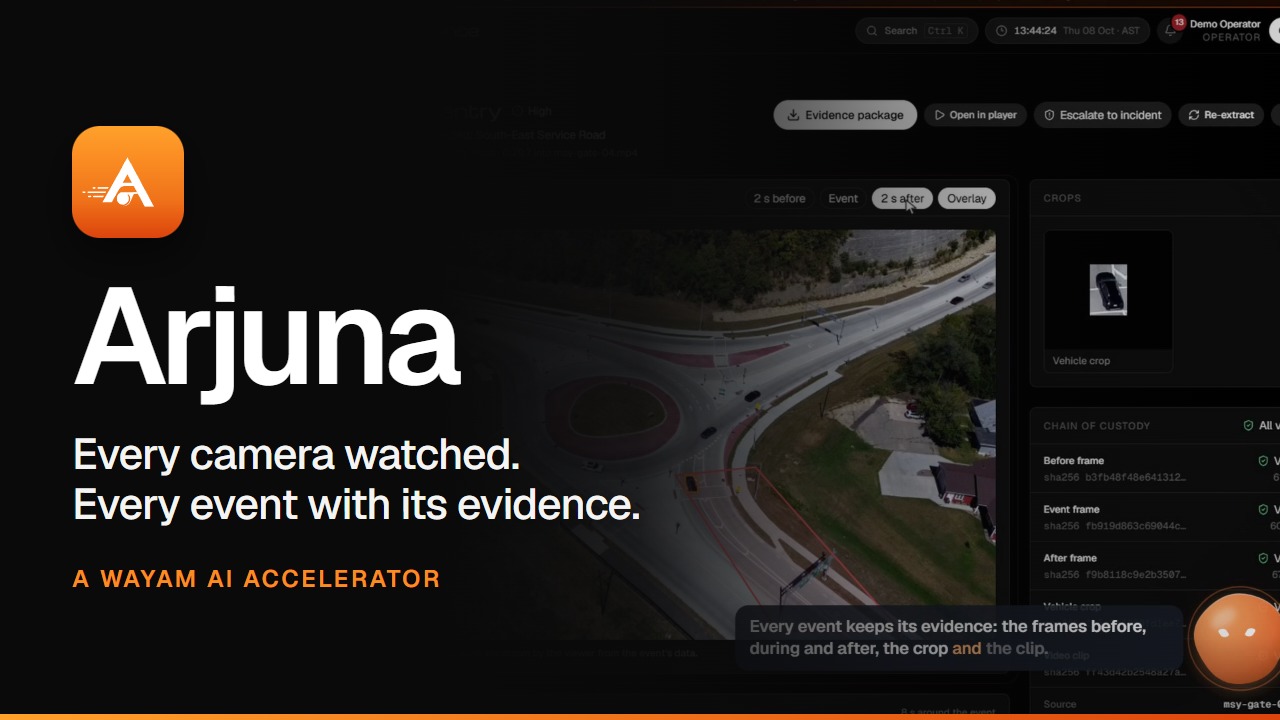
Real-time video analytics on the CCTV you already have.
See the Arjuna acceleratorMore from Arjuna

Autonomous Worker Safety and PPE Compliance Monitoring in Heavy Plants
A primary steel manufacturing mill operating high-risk melt shops, rolling mills, and heavy material handling yards equipped with 250 existing CCTV security cameras.
Read the use case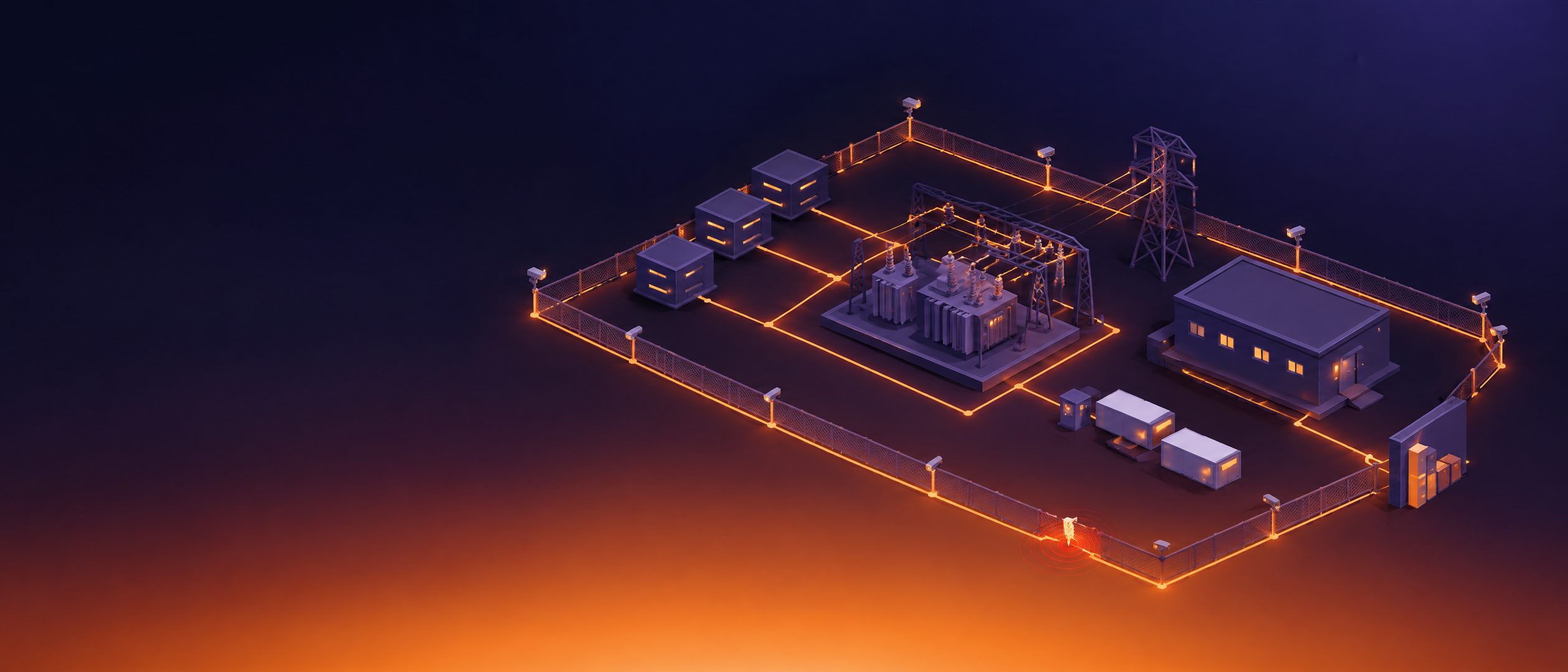
Real-Time Intrusion and Unauthorized Zone Detection in High-Security Sub-Stations
An electric utility provider managing 120 unstaffed high-voltage electrical sub-stations protected by perimeter fence security cameras.
Read the use case
Automated Package and Label Defect Inspection on High-Speed Conveyor Lines
A high-volume consumer packaged goods (CPG) facility producing 120,000 packaged food items daily across 6 high-speed conveyor lines.
Read the use caseBring us the version of this that you actually have.
Every engagement is fixed in scope and milestone-gated. The scoping conversation starts with your systems, not with a template.